
Client: U.S. Department of State (Biden Administration)
Agency: Freeman
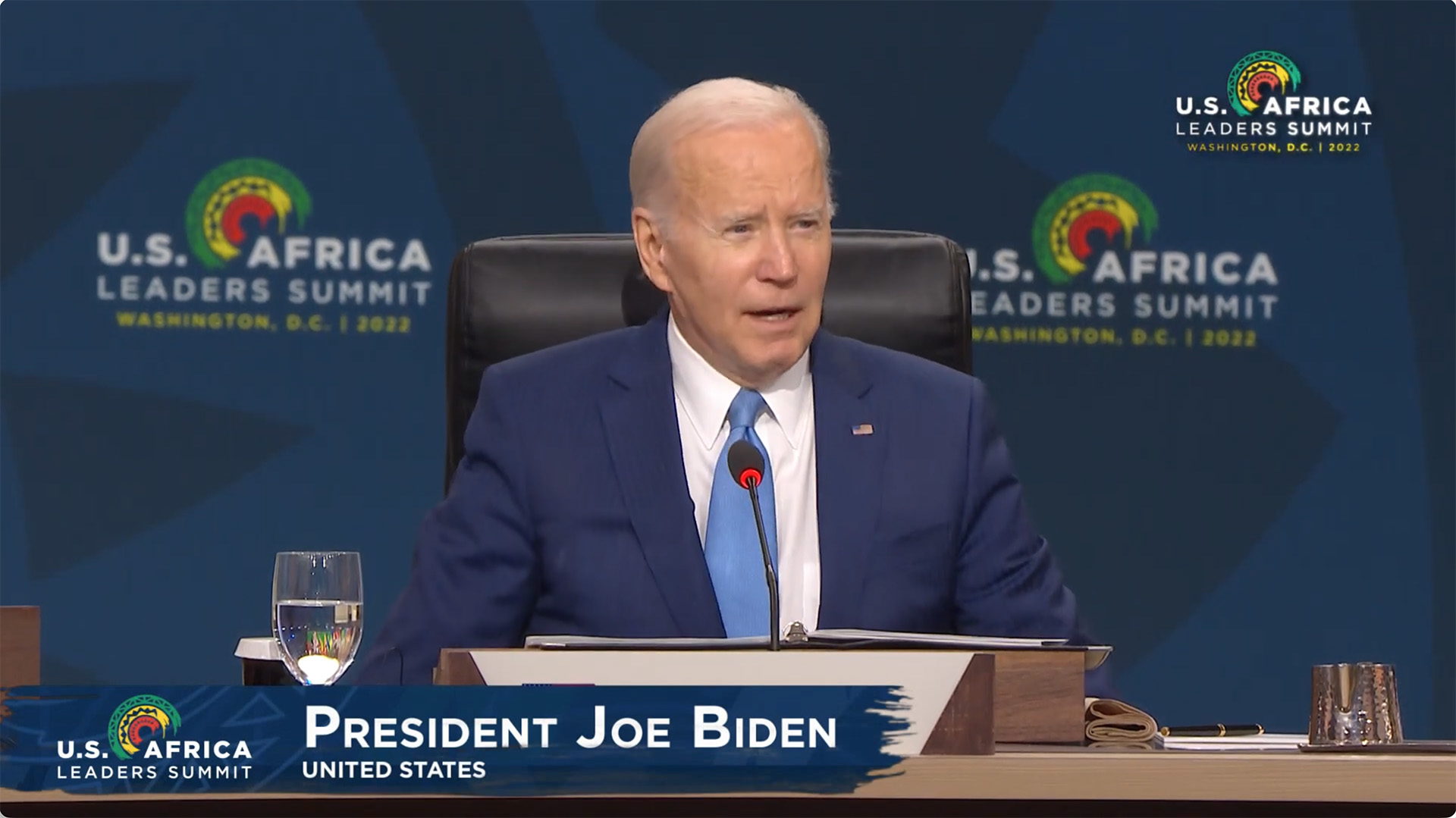
In December 2022, President Biden and Secretary of State Antony Blinken hosted a historic three-day summit bringing together leaders from 50 African nations to strengthen partnerships and recognize Africa’s growing role on the global stage.
As Secretary Blinken stated: “Africa is a major geopolitical force. The United States firmly believes that it’s time to stop treating Africa as a subject of geopolitics, and start treating it as the major geopolitical player it has become.”
To execute an event of this diplomatic magnitude, the State Department turned to Freeman to coordinate all technical services, production elements, digital graphics, and content management across three distinctly different days of programming at the Washington Convention Center.
GXP’s Role: Lead Show Producer
We led the production team responsible for everything that happened on stage across all three days. With approximately 150 crew members supporting the effort, our mandate was clear: ensure flawless execution of every session, every transition, and every moment involving heads of state. All sessions were multi-camera live-streamed with simultaneous interpretation.
The challenge was that each day had a completely different format and production demand.
Day 1: Civil Society and Diaspora Engagement (Multi-Stage Coordination)
The opening day featured concurrent programming across 10+ stages simultaneously, covering topics from trade and investment to health, climate change, peace, security, governance, and even space cooperation. With approximately 1,000 total attendees moving between sessions, this was logistical choreography at scale.
Most sessions were structured as breakout-style panels or roundtable discussions. Relatively straightforward from a production standpoint. However, several sessions required full show-style production with video playback, scripted remarks, and coordinated on/off stage cues. For these more complex sessions, we embedded producers in the rooms to execute in real-time.
My team’s focus was ensuring every stage had what it needed, whether that was simple AV support or full production coordination, while maintaining the professional standard befitting discussions among world leaders.
Day 2: U.S.-Africa Business Forum (Full General Session Production)
Day 2 shifted to a single, high-stakes general session format that ran all day. Over 300 CEOs and private sector leaders from American and African companies convened with the Heads of Delegation to announce investments and commitments in critical sectors: health, infrastructure, energy, agribusiness, and digital technology.
The program structure was built around formal commitment announcements. Typically, a speaker would deliver prepared remarks setting up the commitment, then transition to a signing ceremony where representatives from the committing organization and the U.S. government would come on stage together to formalize the agreement.
This meant constant movement, speakers cycling on and off stage, signings requiring precise coordination, and a relentless pace throughout the day. The goal was to keep the program on time and prevent any issues from surfacing in front of the audience.
President Biden closed the Business Forum with in-person remarks, capping a day focused squarely on catalyzing two-way investment between the U.S. and African nations.
Day 3: Leaders’ Plenary (Presidential-Level Coordination)
The final day was dedicated to high-level diplomatic discussions in a roundtable plenary format, with all 50 African nations represented at the table.
President Biden opened the day with a session on partnering on Agenda 2063—the African Union’s strategic vision for the continent. Vice President Harris chaired a working lunch in the same production space. President Biden returned to close the summit with a discussion on food security and food systems resilience, addressing the disproportionate impact of rising food and fertilizer prices on African partners due to Russia’s war in Ukraine.
From a production standpoint, Day 3 was less about managing volume and more about precision. With both POTUS and VPOTUS participating, Secret Service protection detail added layers of complexity:
- Movement restrictions: Entrances, exits, and backstage areas were tightly controlled with multiple security perimeters between attendees and the President/Vice President.
- Credentialing: Access was limited and heavily vetted.
- Coordination across teams: Our production team worked in lockstep with Secret Service and State Department Protocol Officers to align on timing, staging, and transitions.
Every movement on and off stage required advance coordination. My role was ensuring our production plan integrated seamlessly with security protocols—no surprises, no delays, and nothing that would compromise either the program flow or the safety requirements.
The Scale
Across three days, our team managed:
- 50 African nations plus U.S. delegation leaders
- Approximately 1,000 attendees
- 10+ simultaneous stages on Day 1
- Full-day general session on Day 2 with 300+ business leaders
- Roundtable plenary with POTUS and VPOTUS on Day 3
- Multi-camera live streaming of all sessions
- Simultaneous interpretation across all programming
- 150-person production crew
The Impact
The U.S.-Africa Leaders Summit represented a diplomatic milestone, and Freeman’s production execution ensured the focus remained on the relationships being built and the commitments being made, not on logistics or technical challenges.
From managing 10+ stages simultaneously to coordinating Presidential movements with Secret Service precision, our team delivered three flawless days of programming that reinforced the gravity and importance of U.S.-Africa partnership.
The State Department’s continued trust in us for high-stakes diplomatic events speaks to the seamless execution we delivered when the stakes couldn’t be higher.
